The Tenant Project

Renters' Rights Act

The biggest changes to renting in England, explained in plain English.

Understanding The Biggest Reform To Private Renting In A Generation

The Renters’ Rights Act introduced the most significant changes to private renting in decades, giving tenants stronger protections while changing how landlords manage and let their properties. From the abolition of Section 21 ‘no fault’ evictions to new rules on rent increases, pets and tenancy agreements, there’s a lot to understand.

We’ve broken the legislation down into simple, easy-to-follow guides so you can learn about each change at your own pace and understand what it means for your tenancy.
Illegal Eviction

Section 21 Banned

Learn what the end of ‘no fault’ evictions means, when a landlord can still ask you to leave and how the new possession rules work.
Tenancy Agreement

Periodic Tenancies

Understand how the new periodic tenancy system works, how much notice tenants need to give and what changed when fixed-term assured shorthold tenancies were abolished.
Grounds for Possession

Grounds For Possession

Find out the legal reasons a landlord can use to recover possession of a property and how the new possession grounds work under the Renters’ Rights Act.
Rent Increase

Rent Increases

Learn when your landlord can increase your rent, how the new rules work and what you can do if you believe an increase is unfair.
Rent in Advance

Rent In Advance Rules

Learn how the new rules limit the amount of rent landlords can request in advance and what your rights are if you’re asked to pay more.
Pets Renting

Pets In Rented Homes

Discover your rights when requesting a pet, when a landlord can refuse and the responsibilities that come with keeping an animal in a rented property.
Universal Credit

Rental Discrimination

Understand the new protections designed to prevent landlords from unfairly refusing tenants simply because they have children or receive benefits.
Renters Rights Information Sheet

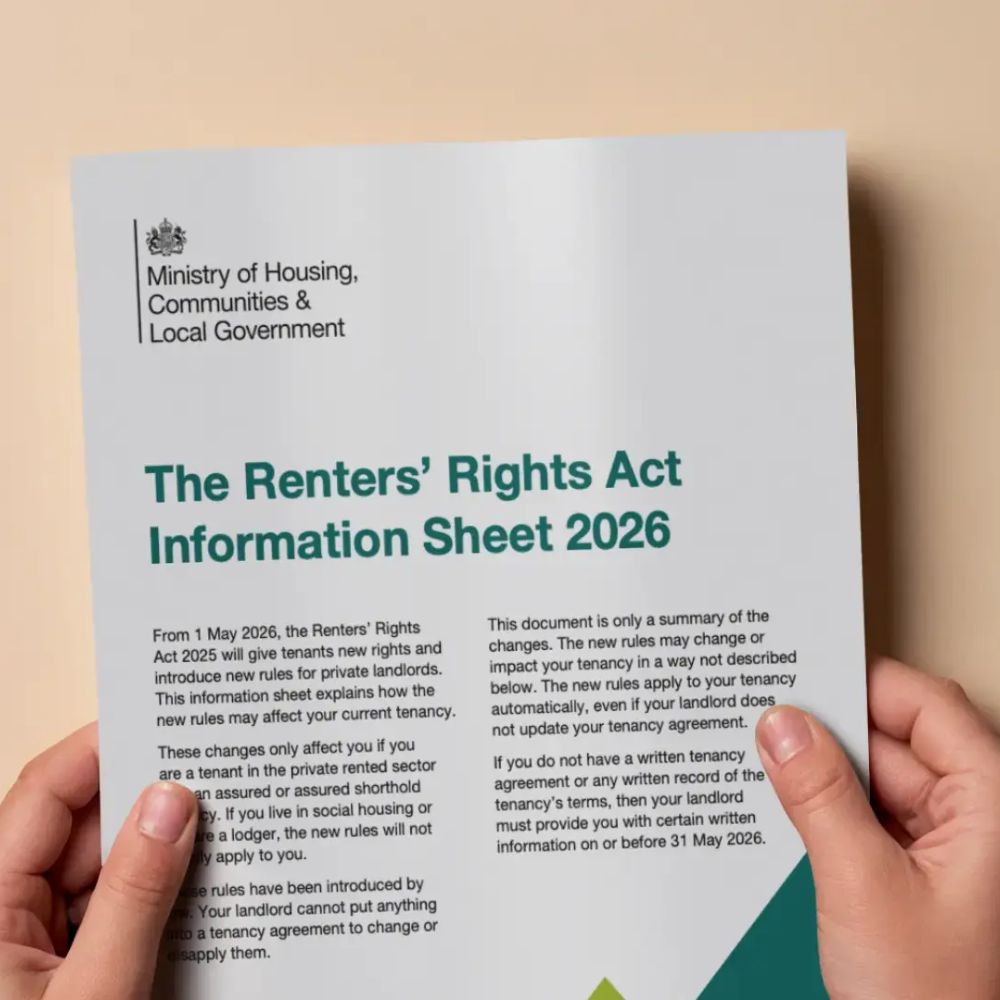
Renters' Rights Act Information Sheet 2026

Find out what The Renters’ Rights Act Information Sheet 2026 is, when landlords must provide it and why it’s an important part of your tenancy.
Database

Private Rented Sector Database

Learn what the new landlord database is, what information it contains and how it aims to improve transparency across the private rented sector.
Ombudsman

Private Rented Sector Ombudsman

Find out what the Ombudsman does, when you can make a complaint and how it could help resolve disputes without going to court.
Mould

Decent Homes Standard

Understand how minimum property standards are changing and what landlords are expected to provide to ensure rented homes are safe and suitable to live in.
Holding Deposit

Rent Repayment Orders

Learn when you could claim up to 24 months’ rent if your landlord has committed certain housing offences, how the Renters’ Rights Act strengthened Rent Repayment Orders and whether you may be eligible to bring a claim.
Keys

What Hasn't Changed

Not everything changed under the Renters’ Rights Act. Learn which rules stayed the same and separate the facts from the common myths

Can't find an answer?

If you can’t find the answer in our guides, our team can point you towards the most relevant information or support.
Landlord Tenant Law - The Tenant Project

Explore
Housing Law

Looking for the legal details? Our Housing Law library explains the legislation behind private renting in clear, easy-to-understand language.

Whether you’re learning about your rights or your landlord’s responsibilities, our guides explain the law in plain English, without the legal jargon.

Explore key topics including tenancy deposits, repairs, evictions, rent increases, property safety and much more.

Scroll to Top